Meta Description: A step-by-step guide to proper peptide reconstitution for laboratory research. Learn about solvents, storage, handling, and common mistakes that compromise experimental data.
Reading time: 6 to 8 minutes
Target audience: Laboratory researchers, students, and independent scientists
Introduction
You have received your high-purity peptide. The Certificate of Analysis confirms 99 percent or higher purity. The vial is properly stored at minus 20 degrees Celsius. Now comes one of the most critical steps in your research workflow: reconstitution.
Reconstitution is the process of dissolving lyophilized, or freeze-dried, peptide powder into a liquid solution suitable for laboratory experiments. While this sounds simple, improper reconstitution is one of the leading causes of failed experiments, inconsistent data, and wasted research materials.
Many researchers, especially those new to working with synthetic peptides, make avoidable mistakes that degrade their peptides before the first experiment even begins. This guide walks you through proper reconstitution best practices to protect your research investment and ensure reproducible results.
Understanding Lyophilized Peptides
Before discussing reconstitution, it helps to understand what lyophilization actually does. Lyophilization is a freeze-drying process that removes water from a peptide solution while preserving the peptide’s structural integrity. The result is a stable, dry powder or cake at the bottom of the vial.
Lyophilized peptides offer several advantages. They are stable for long periods when stored properly. They are easy to transport without temperature-controlled shipping. They allow researchers to reconstitute only what they need at a given time.
However, lyophilized peptides are also fragile. Improper handling, exposure to moisture, or incorrect reconstitution can degrade the peptide immediately.
Essential Equipment and Supplies
Before you begin reconstitution, gather the following supplies.
You will need the lyophilized peptide vial itself. You will need a suitable solvent, which is typically bacteriostatic water, sterile water, or a diluted acetic acid solution depending on the peptide. You will need a sterile syringe with a needle. You will need alcohol swabs to sterilize vial stoppers. You will need a clean, dry work surface. You will also need proper personal protective equipment including gloves and safety glasses.
All supplies should be sterile. Contamination introduced during reconstitution will ruin your peptide and compromise your research.
Choosing the Right Solvent
Not all peptides dissolve in the same solvent. Choosing the wrong solvent is a common mistake that leads to cloudy solutions, precipitated peptides, and failed experiments.
Most peptides dissolve readily in sterile water or bacteriostatic water. Bacteriostatic water contains 0.9 percent benzyl alcohol, which inhibits bacterial growth and allows the reconstituted peptide to be stored longer in the refrigerator.
Some peptides, particularly those that are hydrophobic or contain many non-polar amino acids, require a slightly acidic environment. For these peptides, a 0.1 percent to 1 percent acetic acid solution is often recommended.
A few peptides require a small percentage of dimethyl sulfoxide, known as DMSO, to achieve full dissolution. This is less common and typically noted in the product documentation.
Always check the product data sheet or Certificate of Analysis for specific solvent recommendations. When in doubt, start with bacteriostatic water. If the peptide does not dissolve completely, which you can see as a clear solution with no particles, then try a dilute acetic acid solution.
Step by Step Reconstitution Protocol
Follow these steps carefully for each vial of peptide.
First, remove the peptide vial from the freezer. Allow it to come to room temperature before opening. This typically takes 10 to 15 minutes. Opening a cold vial causes condensation to form inside, which introduces moisture and can degrade the peptide.
Second, clean the rubber stopper on the peptide vial with an alcohol swab. Also clean the top of your solvent vial if you are using a multi-dose container.
Third, draw your desired volume of solvent into the sterile syringe. The volume you choose determines the final concentration of your peptide solution. For example, adding one milliliter of solvent to a five milligram vial gives a concentration of five milligrams per milliliter.
Fourth, insert the needle through the center of the rubber stopper on the peptide vial. Angle the needle so it touches the inner glass wall of the vial, not the lyophilized peptide powder itself.
Fifth, slowly inject the solvent down the inner glass wall. Do not spray the solvent directly onto the peptide powder. Direct spraying can damage the peptide structure and cause aggregation.
Sixth, gently swirl the vial to mix. Do not shake the vial vigorously. Shaking introduces air bubbles and can cause peptide aggregation. Swirl until the solution is clear and no particles remain.
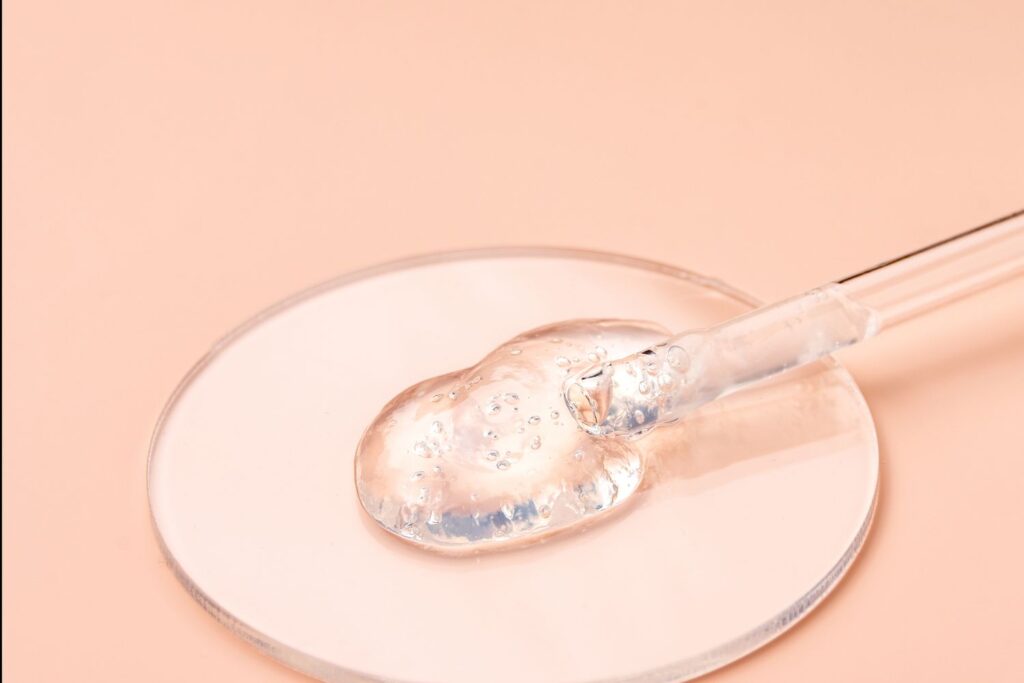
Seventh, inspect the solution. It should be completely clear with no floating particles, cloudiness, or precipitate. If the solution is cloudy or contains particles, the peptide may not be fully dissolved. Try gently swirling for another minute. If it remains cloudy, the solvent choice may be incorrect.
Eighth, store the reconstituted peptide according to the product recommendations. Most reconstituted peptides are stored at 4 degrees Celsius in a refrigerator and must be used within 7 to 14 days.
Common Reconstitution Mistakes
Many researchers make mistakes that compromise their peptides. Here are the most common ones to avoid.
Opening a cold vial is a frequent error. When you open a frozen vial, warm room air enters and condenses on the cold peptide powder. This moisture begins degrading the peptide immediately. Always let vials reach room temperature before opening.
Shaking the vial instead of swirling is another common mistake. Vigorous shaking introduces air bubbles and mechanical stress that can cause peptides to aggregate or form amyloid-like fibrils. These aggregated peptides are useless for most research applications.
Using the wrong solvent is also problematic. If your peptide requires acetic acid for dissolution but you use plain water, you will end up with a cloudy suspension rather than a true solution. This leads to inaccurate concentrations and failed experiments.
Reconstituting more than you need for a single experiment is wasteful. Peptides in solution degrade much faster than lyophilized peptides. Only reconstitute the amount you plan to use within the recommended time frame.
Storing reconstituted peptides improperly is another issue. Some researchers leave reconstituted peptides at room temperature for hours or days. Most reconstituted peptides must be refrigerated at 4 degrees Celsius. Some require freezing at minus 20 degrees Celsius. Always check the product documentation.
Storage After Reconstitution
Once your peptide is properly reconstituted, storage becomes critical. The stability of a reconstituted peptide depends on several factors including the peptide sequence, the solvent used, the storage temperature, and the number of times the vial is accessed.
For most peptides reconstituted in bacteriostatic water, storage at 4 degrees Celsius is appropriate. At this temperature, most peptides remain stable for 7 to 14 days. Some peptides remain stable for up to 30 days, but this is the exception rather than the rule.
For longer storage, many researchers aliquot their reconstituted peptide into smaller sterile vials and freeze them at minus 20 degrees Celsius or minus 80 degrees Celsius. Freeze-thaw cycles are destructive to peptides, so each aliquot should be used once and then discarded.
Never repeatedly freeze and thaw the same vial. Each freeze-thaw cycle degrades the peptide further. Plan your aliquots so you remove only what you need for a single experiment.
Determining Correct Concentration
Knowing the concentration of your reconstituted peptide solution is essential for accurate dosing in your experiments. The calculation is simple.
Concentration equals the mass of peptide in the vial divided by the volume of solvent added. For example, if you have a five milligram vial and you add one milliliter of solvent, your concentration is five milligrams per milliliter. If you add two milliliters of solvent, your concentration is two point five milligrams per milliliter.
Always record your reconstitution volume and final concentration in your laboratory notebook. This ensures consistency across experiments and allows other researchers to replicate your work.
Troubleshooting Common Problems
Sometimes things go wrong even when you follow best practices. Here is how to troubleshoot common reconstitution problems.
If your peptide does not dissolve completely and remains cloudy, try gently warming the vial to body temperature by holding it in your gloved hand for a minute. Do not use direct heat sources like hot plates or warm water baths. If warming does not help, your solvent choice may be incorrect. Try adding a small amount of dilute acetic acid.
If you see particles floating in the solution, the peptide may have aggregated. Aggregated peptides cannot be rescued. Discard the vial and start fresh with a new vial.
If the solution becomes gel-like or forms a viscous mass, the peptide concentration may be too high or the peptide may have formed a hydrogel. Diluting with additional solvent may help. If not, discard the vial.
If you accidentally add the wrong volume of solvent, you can adjust the concentration by adding more solvent or by accepting the new concentration and recalculating your dosing. Do not attempt to remove solvent after adding it.
Final Thoughts on Peptide Reconstitution
Proper reconstitution is not difficult, but it requires attention to detail. The difference between successful experiments and wasted research often comes down to these small but critical steps.
Let your vials reach room temperature before opening. Choose the correct solvent. Inject solvent down the glass wall, not onto the powder. Swirl gently, never shake. Store reconstituted peptides properly. Use them within the recommended time frame.
Your peptides are valuable. Your time is valuable. Your research deserves the best possible foundation. Reconstitute with care.
Frequently Asked Questions About Peptide Reconstitution
How long does a lyophilized peptide last in the freezer?
When stored properly at minus 20 degrees Celsius or minus 80 degrees Celsius, lyophilized peptides typically remain stable for 12 to 24 months. Always check the expiration date on the Certificate of Analysis.
Can I use tap water to reconstitute peptides?
No. Tap water contains chlorine, minerals, and other contaminants that will degrade your peptide and ruin your experiments. Only use sterile water, bacteriostatic water, or recommended dilute acids.
Why did my peptide turn cloudy after reconstitution?
Cloudiness usually indicates incomplete dissolution or aggregation. Try gentle swirling. If cloudiness persists, your solvent choice may be incorrect. Check the product data sheet.
How many times can I freeze and thaw a reconstituted peptide?
Ideally, zero times. Each freeze-thaw cycle degrades the peptide. Always aliquot your reconstituted peptide into single-use vials before freezing.
What is the difference between sterile water and bacteriostatic water?
Sterile water contains no antimicrobial agents. Bacteriostatic water contains 0.9 percent benzyl alcohol, which prevents bacterial growth and allows longer refrigerated storage.
Where can I find reconstitution instructions for specific Lavish Peptides products?
Every product page on our website includes reconstitution recommendations. You can also contact our California support team for assistance.
About the Author
This guide was written by the research team at Lavish Peptides, a California-based supplier of 99 percent or higher pure research peptides. We serve universities, biotech companies, and independent researchers nationwide.
Related Resources
Understanding Peptide Purity: Why 99 Percent or Higher Matters
How to Read an HPLC Chromatogram
Storage Best Practices for Synthetic Peptides
Understanding Endotoxin Levels in Research
Call to Action
Need high-purity peptides for your research? Browse our collection of 99 percent or higher pure peptides with published Certificates of Analysis.
Shop Research Peptides Now
Questions about reconstitution or a specific product? Contact our California support team.
