
How to Mix Peptides with Bacteriostatic Water searches continue expanding throughout the United Kingdom and Europe as research laboratories increasingly investigate peptide reconstitution systems, laboratory preparation standards, peptide handling workflows, and molecular stability frameworks. As the European peptide market evolves, laboratories searching for How to Mix Peptides ith Bacteriostatic Water resources increasingly prioritize accurate peptide preparation methods, structured reconstitution systems, and laboratory-grade handling protocols.
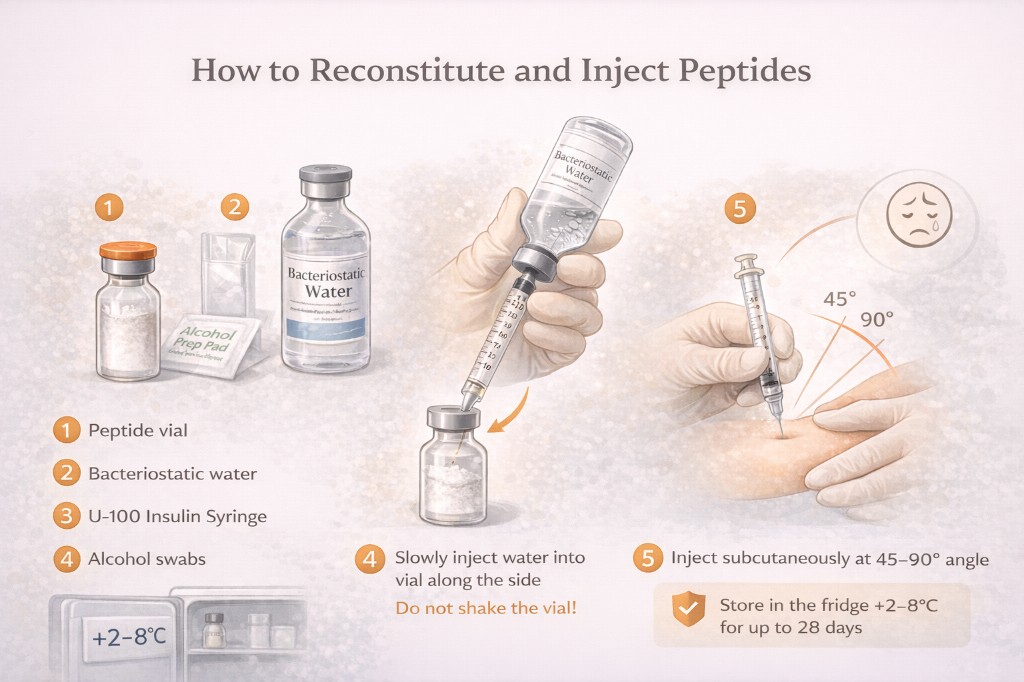
Modern procurement teams and research laboratories investigating How to Mix Peptides with Bacteriostatic Water commonly explore:
- peptide calculator uk mcg to ml
- peptide mixing chart for laboratory research
- peptide vial lyophilisate mixing ratio
- peptide reconstitution guide uk
- peptide storage temperature guidelines
- how long do reconstituted peptides last in fridge
This growing demand reflects broader expansion throughout the peptide industry as laboratories increasingly prioritize accurate peptide handling systems capable of supporting reproducible research workflows.
At https://lavishpeptides.com laboratories can explore advanced peptide compounds supported by transparent sourcing systems, structured peptide verification practices, and laboratory-focused peptide research categories.
Why Proper Peptide Reconstitution Matters
How to Mix Peptides with Bacteriostatic Water remains one of the most important laboratory preparation topics because peptide compounds involve structurally sensitive molecular chains capable of degrading under improper handling conditions.
Research laboratories investigating How to Mix Peptides with Bacteriostatic Water frequently prioritize:
- peptide solution stability
- laboratory preparation consistency
- controlled peptide dilution systems
- refrigeration coordination frameworks
- molecular preservation standards
- peptide handling accuracy
As peptide procurement standards continue evolving throughout Europe, How to Mix Peptides with Bacteriostatic Water searches increasingly overlap with broader commercial research terms including:
- buy peptides uk
- research peptides uk
- peptides uk supplier
- buy high purity peptides uk
- hplc verified peptides europe
- peptides with coa uk
This informational-commercial hybrid search behavior mirrors broader expansion occurring throughout the European peptide research industry.
Understanding Bacteriostatic Water
Bacteriostatic water is commonly utilized within laboratory peptide workflows because it contains a small amount of benzyl alcohol designed to help reduce bacterial growth during multi-use laboratory handling procedures.
Laboratories utilizing How to Mix Peptides with Bacteriostatic Water systems commonly investigate:
- peptide dilution coordination
- laboratory solution stability
- peptide concentration systems
- molecular handling frameworks
- peptide preparation workflows
The increasing number of How to Mix Peptides with Bacteriostatic Water searches reflects growing scientific interest in standardized peptide preparation systems and accurate laboratory workflows.
Step-by-Step Peptide Reconstitution Process
Step 1 — Prepare a Clean Laboratory Environment
Research laboratories commonly begin by ensuring:
- sanitized preparation surfaces
- sterile handling procedures
- low-moisture environments
- controlled refrigeration access
Maintaining clean preparation systems helps reduce contamination risks during peptide handling procedures.
Step 2 — Allow the Peptide Vial to Reach Room Temperature
Freeze-dried peptide compounds should briefly stabilize at room temperature before opening to reduce condensation risks during laboratory handling.
Step 3 — Measure the Bacteriostatic Water
Laboratories commonly utilize structured calculation systems involving:
- peptide calculator uk mcg to ml
- peptide vial lyophilisate mixing ratio
- peptide mixing chart for laboratory research
Example preparation frameworks:
| Peptide Amount | Added Solution | Approximate Concentration |
|---|---|---|
| 5mg | 1ml | 5000mcg/ml |
| 5mg | 2ml | 2500mcg/ml |
| 10mg | 2ml | 5000mcg/ml |
| 10mg | 4ml | 2500mcg/ml |
Step 4 — Slowly Add the Liquid
Bacteriostatic water is commonly added slowly along the inside wall of the vial rather than directly onto the peptide powder to help minimize molecular disruption.
Step 5 — Avoid Aggressive Shaking
Research laboratories generally avoid vigorous shaking because excessive agitation may contribute to:
- peptide instability
- molecular fragmentation
- foam formation
- reduced solution consistency
Instead, gentle swirling is commonly utilized during peptide preparation workflows.
Refrigeration & Storage Standards
Proper refrigeration remains essential after peptide reconstitution procedures.
Research laboratories commonly prioritize:
- peptide storage temperature guidelines
- peptide cooling systems uk
- controlled refrigeration coordination
- low-moisture storage systems
“How long do reconstituted peptides last in fridge” remains one of the most searched peptide preparation topics throughout Europe and the UK.
Although peptide stability may vary depending on molecular structure and preparation systems, reconstituted solutions are generally stored under refrigeration between 2°C and 8°C to support laboratory stability workflows.
Premium Peptide Laboratory UK Standards
Freeze-Dried Powder ──────────────────► Bacteriostatic Water Addition
↓
Controlled Reconstitution
↓
Laboratory Solution Preparation
Modern peptide laboratories increasingly prioritize advanced analytical verification systems before peptide procurement and preparation procedures.
Procurement teams commonly compare:
- premium peptide laboratory uk standards
- peptide coa verification eu systems
- analytical hplc data sheets peptides
- 99 percent purity research peptides
- synthetic amino acid chain sequence research
- hplc verified peptides europe
These verification systems help support reproducible laboratory workflows and structured peptide handling frameworks.
How to Mix Peptides with Bacteriostatic Water & Research Systems
Modern peptide investigations rarely involve isolated peptide compounds independently. Instead, laboratories increasingly evaluate overlapping peptide systems involving multiple peptide formulations simultaneously.
Research laboratories utilizing How to Mix Peptides with Bacteriostatic Water systems frequently investigate compounds including:
- https://lavishpeptides.com/product/bpc-157-uk/
- https://lavishpeptides.com/product/tb-500-uk/
- https://lavishpeptides.com/product/ipamorelin-uk/
- https://lavishpeptides.com/product/cjc-1295-no-dac-uk/
- https://lavishpeptides.com/product/cjc-1295-with-dac-uk/
- https://lavishpeptides.com/product/tesamorelin-uk/
- https://lavishpeptides.com/product/5-amino-1mq-uk/
- https://lavishpeptides.com/product/aicar-uk/
- https://lavishpeptides.com/product/larazotide-uk/
- https://lavishpeptides.com/product/kpv-uk/
These integrated peptide handling systems continue becoming increasingly important throughout advanced peptide research investigations.
Conclusion
How to Mix Peptides with Bacteriostatic Water continues gaining visibility throughout the UK and European peptide research markets as laboratories increasingly prioritize peptide preparation accuracy, structured reconstitution systems, and controlled laboratory handling frameworks. As procurement standards continue evolving, research facilities increasingly prioritize premium peptide laboratory uk standards, peptide coa verification eu systems, and hplc verified peptides europe suppliers capable of supporting reproducible peptide preparation investigations.
Additional scientific literature involving peptide preparation systems and laboratory peptide handling frameworks may also be explored through trusted educational resources including PubMed
Disclaimer
All compounds referenced within this text are supplied strictly for laboratory, in vitro, and pre-clinical scientific research purposes only. These products are not intended for human consumption, therapeutic applications, medical treatment, or diagnostic use.
