
Understanding peptide reconstitution is an important part of laboratory research involving synthetic peptides and other peptide-based materials. A reliable peptide reconstitution guide UK laboratories can refer to should explain the importance of product identification, analytical documentation, stability information, storage conditions and validated laboratory procedures.
Peptides are often supplied in lyophilised form, meaning that they have been freeze-dried to remove water and support stability during storage. Their properties can vary considerably according to amino acid sequence, molecular structure, formulation and intended research application. For this reason, a general procedure should never be assumed to apply to every peptide.
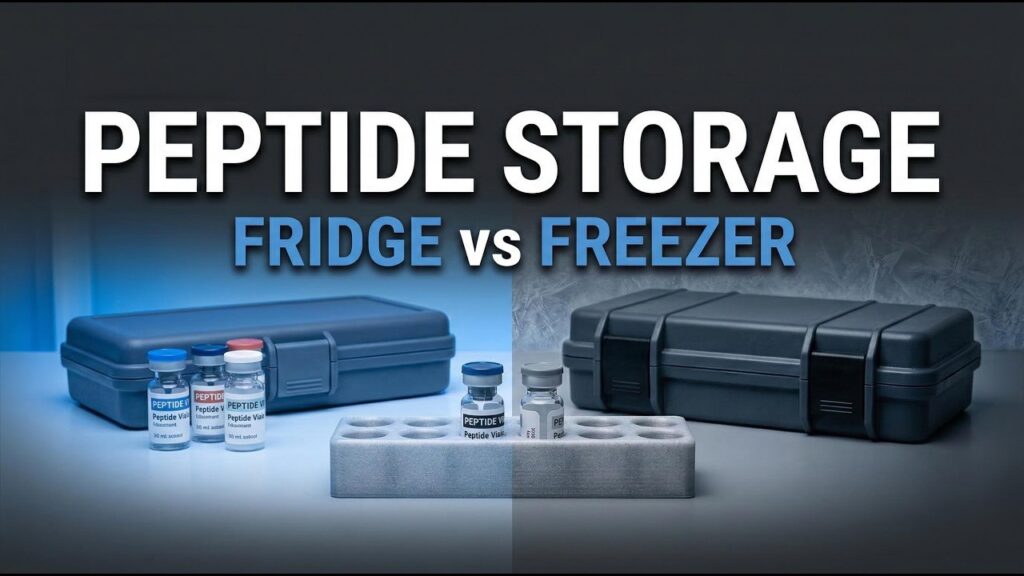
The Lavish Peptides research catalogue provides a starting point for reviewing available research materials and their published product information. Laboratories should assess the documentation for each specific material before establishing any experimental procedure.
This peptide reconstitution guide UK article focuses on laboratory documentation, scientific considerations, storage principles and quality control. It does not provide instructions for preparing injectable products, calculating human doses or mixing substances for administration. Any preparation of medicinal products must follow the applicable authorised product information and qualified professional procedures.
1. What Is Peptide Reconstitution?
Peptide reconstitution is a term used to describe the process of returning a lyophilised or otherwise dried material to a liquid state for an intended laboratory or pharmaceutical application.
Lyophilisation is commonly used because removing water can help protect certain materials during storage. However, a freeze-dried peptide is not automatically stable under every environmental condition. Temperature, humidity, light exposure, oxygen and the chemical characteristics of the peptide can all influence its stability.
A laboratory peptide reconstitution guide UK researchers use should therefore begin with the material’s identity and documentation rather than a universal preparation formula.
Important questions include:
- What is the exact peptide or compound?
- Is the material supplied in lyophilised form?
- What analytical documentation is available?
- What stability information has been established?
- What is the intended laboratory application?
- Are there product-specific restrictions or handling requirements?
These questions help laboratories avoid applying general assumptions to materials with different chemical and physical characteristics.
2. Understanding Lyophilised Peptides
Lyophilised peptides are freeze-dried materials in which water has been removed through a controlled drying process.
This format can offer advantages for storage and transport, but it does not mean the material is immune to degradation. Moisture absorption, temperature fluctuations and inappropriate storage conditions may affect the quality of a sample.
A peptide’s amino acid sequence can also influence its stability. Certain amino acid residues are more susceptible to chemical changes such as oxidation, hydrolysis or deamidation.
The European Medicines Agency’s synthetic peptide guidance discusses stability assessment, degradation pathways, storage conditions and the importance of scientifically justified stability studies.
For a peptide reconstitution guide UK laboratory teams should use, the main lesson is that stability must be evaluated for the specific material rather than assumed from its general product category.
Why the lyophilised state matters
The dry state can help limit some degradation processes associated with water exposure. However, a sealed vial can still be affected by poor storage, damaged packaging or moisture entering the container.
Laboratories should therefore review the supplier’s stated storage requirements and maintain suitable inventory records.
3. Why Product-Specific Documentation Is Essential
Not all peptides have identical characteristics. Differences in sequence, molecular weight, charge, hydrophobicity and formulation can influence their analytical behaviour and stability.
This is why a peptide reconstitution guide UK laboratories consult should never replace product-specific documentation.
Before establishing an approved laboratory procedure, organisations should review the available information for the exact material.
Useful documentation may include:
- Product identification and description.
- Molecular formula or sequence information, where applicable.
- Molecular weight.
- Batch or lot reference.
- Certificate of Analysis.
- Analytical test information.
- Storage conditions.
- Safety Data Sheet.
- Relevant stability information.
The information should be consistent across the product description, analytical documents and internal laboratory records.
Where information is missing or unclear, laboratories should seek clarification rather than assume that a procedure used for another peptide is appropriate.
4. Understanding Certificates of Analysis
A Certificate of Analysis, commonly called a COA, provides information about specified analytical tests and their reported findings.
For research organisations, a COA can help establish what has been tested and which batch the reported results relate to.
A useful COA should make it possible to identify the material, understand the test performed and review the findings.
What to look for in a COA
A laboratory reviewing peptide documentation should consider:
- Product name or identifier.
- Batch or lot number.
- Test date.
- Analytical method.
- Reported results.
- Laboratory or issuing organisation.
- Any stated limitations.
A generic document without a clear batch reference may not establish the analytical status of a particular supplied batch.
It is also important to understand what a COA does not prove. A reported purity result does not automatically establish sterility, biological activity, endotoxin status or suitability for a particular experiment.
For more information about published materials, visit the Lavish Peptides blog.
5. HPLC and LC-MS in Peptide Quality Assessment
High-performance liquid chromatography, or HPLC, is an analytical technique used to separate components in a sample.
In peptide analysis, HPLC can provide information about the sample’s chromatographic profile and support an assessment of relative purity under the stated test conditions.
Liquid chromatography–mass spectrometry, or LC-MS, combines chromatographic separation with mass spectrometry. It can provide complementary information that supports the investigation of molecular identity and mass.
These methods have different analytical purposes. Neither should be described as automatically proving every quality characteristic of a peptide.
When using a peptide reconstitution guide UK laboratories should distinguish between analytical evidence about the original material and evidence about its condition after subsequent laboratory processing.
A useful quality-control framework may include:
- Reviewing the original analytical report.
- Confirming the batch reference.
- Recording the date of receipt.
- Maintaining sample identification.
- Recording relevant storage history.
- Documenting deviations from approved laboratory procedures.
- Retaining analytical records.
These practices support traceability and help laboratories interpret results more consistently.
6. Solubility and Peptide Characteristics
Solubility is an important scientific consideration when working with peptide materials.
Different peptide sequences can behave differently in aqueous and other laboratory environments. Factors such as amino acid composition, net charge, hydrophobicity and the surrounding chemical environment can influence observed solubility.
A peptide that behaves well in one experimental system may not behave the same way in another.
For this reason, a general peptide reconstitution guide UK researchers read should not suggest that one solvent or preparation method is suitable for every peptide.
Why sequence composition matters
Peptides contain different combinations of amino acids. Some sequences contain a greater proportion of charged residues, while others contain more hydrophobic residues.
These differences can influence interactions with the surrounding environment and contribute to variation in solubility.
Researchers should consult product-specific scientific information and validated laboratory documentation rather than relying on broad assumptions.
Why visible appearance is not enough
The appearance of a sample cannot establish its complete analytical quality.
A clear-looking sample does not necessarily prove molecular identity, purity or stability. Similarly, visible changes should not be interpreted without considering the relevant analytical methods and laboratory procedures.
Where the quality of a material is uncertain, appropriate analytical assessment is more meaningful than visual inspection alone.
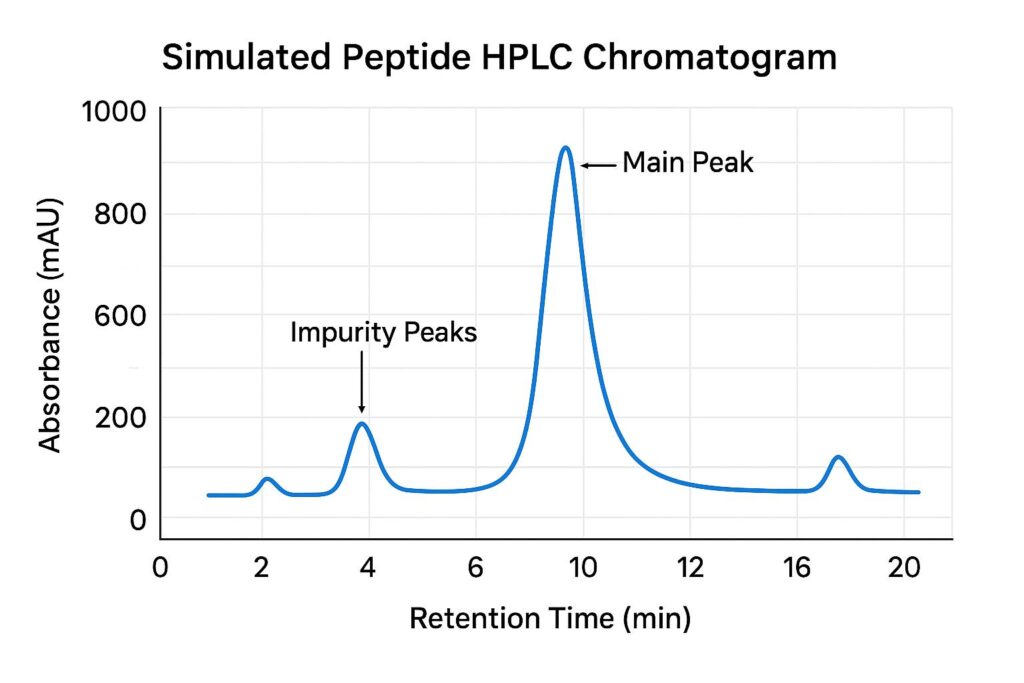
7. Peptide Storage and Stability Considerations
Storage is one of the most important subjects in any peptide reconstitution guide UK laboratory teams use.
Peptide stability depends on the individual compound, formulation, packaging and storage environment. General temperature recommendations should not be treated as universal shelf-life guarantees.
The European Medicines Agency’s scientific guidance discusses the importance of justified stability studies and the evaluation of degradation pathways for synthetic peptides.
Temperature
Temperature can influence the rate of chemical degradation.
Laboratories should follow the storage conditions specified for the particular material and maintain appropriate temperature-monitoring records where required.
Moisture
Some lyophilised materials can absorb moisture from their surroundings.
Poorly controlled humidity or compromised packaging may affect sample quality. Laboratories should therefore maintain suitable storage conditions and follow approved procedures for protecting materials from moisture exposure.
Light
Certain amino acid residues may be susceptible to light-related degradation.
The need for light protection should be determined using product-specific information and the relevant laboratory assessment.
Oxygen
Oxidation can affect susceptible amino acid residues and may contribute to changes in peptide composition.
Storage and handling requirements should account for the known stability characteristics of the specific material.
Time
A sample’s stability is not determined by temperature alone. The period of storage, packaging conditions and chemical composition all contribute to the overall stability profile.
A peptide reconstitution guide UK laboratories follow should therefore distinguish between established stability data and general storage assumptions.
8. Laboratory Records and Standard Operating Procedures
A Standard Operating Procedure, or SOP, is a documented procedure that describes how a particular laboratory activity is controlled and recorded.
For organisations working with peptide materials, SOPs help promote consistency and accountability.
An appropriate laboratory record system may include:
- Material identification.
- Supplier details.
- Batch number.
- Date received.
- Date of analytical review.
- Storage location.
- Relevant storage conditions.
- Approved procedure reference.
- Responsible personnel.
- Deviations and corrective actions.
A peptide reconstitution guide UK laboratories use should encourage documented, product-specific procedures rather than informal instructions copied from unrelated products.
Where the material is a medicinal product, preparation and handling must also comply with the relevant professional, product-specific and regulatory requirements.
9. Research Materials Versus Medicinal Products
One of the most important distinctions for UK readers is the difference between research materials and medicinal products.
A product labelled for laboratory research is not automatically authorised for human use. Equally, a research-use disclaimer does not remove legal restrictions that may apply to the substance, its supply or its importation.
The Medicines and Healthcare products Regulatory Agency, or MHRA, publishes guidance on the supply of unlicensed medicinal products, including the requirements that apply to certain imports and supplies.
Organisations should establish the classification of the specific product and seek appropriate regulatory advice where necessary.
For this reason, a peptide reconstitution guide UK audience should not present research materials as medicines or imply that general laboratory information can replace an authorised clinical or pharmaceutical procedure.
10. Common Mistakes in Peptide Laboratory Documentation
A good quality system should help laboratories avoid common documentation and process errors.
Applying one procedure to every peptide
Different peptide sequences can have different properties. A procedure developed for one material should not automatically be applied to another.
Assuming purity establishes every quality characteristic
Purity, identity, sterility and other quality attributes are distinct. Each requires suitable evidence.
Using generic storage information as a shelf-life guarantee
Storage recommendations must be interpreted in the context of the particular product and its supporting stability data.
Ignoring batch identification
Without a clear batch reference, it may be difficult to connect a material with its analytical documentation.
Confusing research materials with medicines
Research-use labelling does not establish authorisation for human use or remove applicable medicines legislation.
Failing to document deviations
Unrecorded deviations can make it harder to investigate inconsistent laboratory results or assess the reliability of an experiment.
Complete Peptide Reconstitution Guide UK: Additional Laboratory Information
A comprehensive peptide reconstitution guide UK laboratory teams can consult should explain why product-specific information matters. This peptide reconstitution guide UK section expands on documentation, analytical quality, stability and responsible laboratory practices.
Peptide Documentation and Research Standards
A peptide reconstitution guide UK should begin with accurate product identification. Laboratories using a peptide reconstitution guide UK should review the product description, batch information and available analytical records.
This peptide reconstitution guide UK also highlights the importance of understanding the limitations of general laboratory information. A peptide reconstitution guide UK cannot replace a validated procedure developed for a specific material.
For organisations reviewing a peptide reconstitution guide UK, consistency between product documentation and laboratory records is essential. A reliable peptide reconstitution guide UK should also distinguish analytical findings from assumptions about product quality.
Understanding Peptide Stability
A peptide reconstitution guide UK should explain that peptide stability varies according to molecular structure, formulation and environmental conditions. Laboratories consulting a peptide reconstitution guide UK should avoid assuming that all peptide materials have identical storage requirements.
The information presented in this peptide reconstitution guide UK is intended to support a better understanding of laboratory documentation. A peptide reconstitution guide UK should encourage researchers to review product-specific stability information.
When evaluating a peptide reconstitution guide UK, laboratories should also consider the role of temperature, moisture and light exposure. This peptide reconstitution guide UK emphasises that storage recommendations should be supported by relevant product information.
Analytical Testing and Quality Assessment
A peptide reconstitution guide UK should explain the role of analytical testing in laboratory quality assessment. Researchers using a peptide reconstitution guide UK can benefit from understanding the differences between HPLC and LC-MS.
This peptide reconstitution guide UK also explains why purity results should not be interpreted as proof of every quality characteristic. A peptide reconstitution guide UK should encourage careful examination of analytical reports.
For laboratories applying a peptide reconstitution guide UK, batch identification and traceability are important documentation considerations. A peptide reconstitution guide UK should also encourage the retention of relevant certificates and laboratory records.
Responsible Laboratory Procedures
A peptide reconstitution guide UK should support responsible research practices rather than encourage universal preparation methods. Laboratories consulting a peptide reconstitution guide UK should follow approved, product-specific procedures.
This peptide reconstitution guide UK reinforces the importance of using appropriate laboratory documentation. A peptide reconstitution guide UK should not replace qualified oversight or applicable safety requirements.
When reviewing a peptide reconstitution guide UK, organisations should distinguish between general scientific information and instructions authorised for a particular product. This peptide reconstitution guide UK maintains that distinction throughout its discussion.
UK Regulatory and Research Considerations
A peptide reconstitution guide UK should recognise that research materials and medicinal products may be subject to different regulatory requirements. Laboratories using a peptide reconstitution guide UK should establish the legal classification of the specific material.
This peptide reconstitution guide UK encourages readers to consult relevant MHRA guidance when medicinal product requirements may apply. A peptide reconstitution guide UK should never imply that research-use-only labelling removes applicable legal restrictions.
For additional context, this peptide reconstitution guide UK highlights the importance of product-specific regulatory assessment. A peptide reconstitution guide UK should promote transparent documentation and responsible procurement.
Final Laboratory Quality Checklist
A peptide reconstitution guide UK is most useful when it encourages laboratories to consider the complete documentation package. Researchers consulting a peptide reconstitution guide UK should review product identity, batch references and analytical information.
This peptide reconstitution guide UK also highlights the value of consistent laboratory records. A peptide reconstitution guide UK should encourage clear documentation of storage conditions and relevant deviations.
Ultimately, this peptide reconstitution guide UK provides an educational overview of important research considerations. A peptide reconstitution guide UK should be used alongside appropriate scientific references, product-specific information and qualified laboratory oversight.
Frequently Asked Questions
1. What is peptide reconstitution?
Peptide reconstitution refers to returning a dried or lyophilised peptide material to a liquid state for an intended laboratory or pharmaceutical application. The appropriate procedure depends on the specific material and its approved documentation.
2. Why are peptides supplied in lyophilised form?
Lyophilisation removes water and can help improve the storage stability of certain materials. The actual stability depends on the peptide’s characteristics, packaging and storage conditions.
3. Does every peptide have the same storage requirements?
No. Storage requirements can differ according to amino acid sequence, formulation, packaging and available stability data. Laboratories should follow product-specific documentation.
4. What is a peptide Certificate of Analysis?
A COA is a document reporting specified analytical findings for a material or batch. It can support product identification and quality review, but it does not automatically prove every quality characteristic.
5. What is the difference between HPLC and LC-MS?
HPLC separates components within a sample and can support chromatographic purity assessment. LC-MS combines chromatography with mass spectrometry and can provide complementary information about molecular mass and identity.
6. Can a general peptide reconstitution guide replace an SOP?
No. A general guide provides background information, while a laboratory SOP should be specific to the material, intended activity, validated method and applicable requirements.
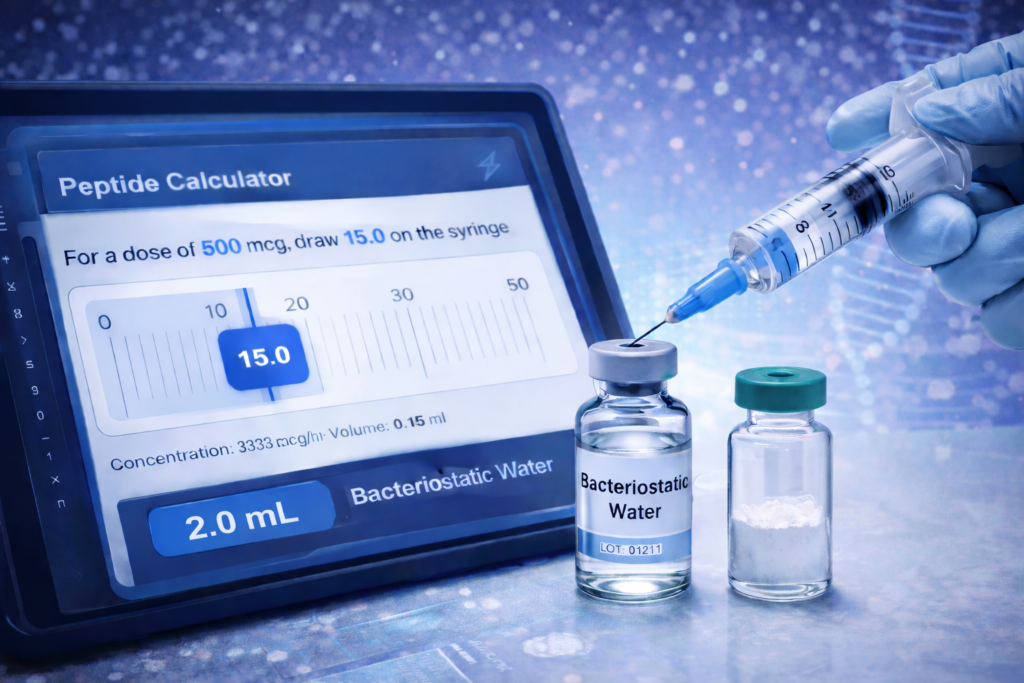
7. Is bacteriostatic water suitable for every peptide?
No universal statement can establish that a particular diluent is suitable for every peptide or application. The appropriate material and procedure must be determined through authorised product-specific documentation and qualified oversight.
8. Does research-use-only labelling mean a peptide is unrestricted in the UK?
No. The legal status of a substance and its supply depends on the applicable legislation and product classification. A research-use statement does not override regulatory requirements.
9. Where can UK laboratories find official regulatory information?
The MHRA publishes information about medicines regulation, including the supply of unlicensed medicinal products. Organisations should consult official guidance and qualified regulatory professionals for product-specific questions.
Official UK and European Peptide Research Guidance
When using a peptide reconstitution guide UK laboratories should consult authoritative scientific and regulatory resources rather than relying exclusively on commercial supplier information.
The Medicines and Healthcare products Regulatory Agency (MHRA) provides guidance on the supply of unlicensed medicinal products, including the regulatory responsibilities associated with certain medicinal product supplies. Read the official MHRA guidance on the supply of unlicensed medicinal products.
For additional scientific information, the European Medicines Agency (EMA) publishes guidance covering the development and manufacture of synthetic peptides. This resource discusses quality considerations, manufacturing processes and analytical evaluation. Read the EMA guideline on the development and manufacture of synthetic peptides.
These resources provide useful background for laboratories reviewing peptide documentation, quality standards and applicable regulatory requirements. They should be considered alongside product-specific documentation and relevant professional advice.
Conclusion: Use Product-Specific Information and Proper Laboratory Controls
A reliable peptide reconstitution guide UK laboratories can use should place documentation, analytical evidence, stability assessment and regulatory awareness at the centre of the discussion.
Lyophilised peptides can have different physical and chemical characteristics, so universal preparation assumptions are inappropriate. HPLC, LC-MS and Certificates of Analysis can provide useful information, but their findings must be interpreted according to the scope of each test.
Laboratories should maintain appropriate records, follow approved procedures and verify the regulatory status of the specific material. This approach supports more consistent research documentation and helps prevent confusion between laboratory research materials and medicinal products.
For additional company and catalogue information, visit Lavish Peptides or review the Lavish Peptides research catalogue.
