
A peptide mixing chart for laboratory research is a commonly searched resource among people looking for information about peptide compatibility, laboratory solvents, measurement terminology and research documentation. However, peptide materials have different chemical properties, and a universal mixing chart cannot reliably describe the requirements of every compound.
Peptides are chains of amino acids that can vary in length, sequence, molecular structure and physical characteristics. These differences influence their solubility, stability and behaviour under different laboratory conditions.
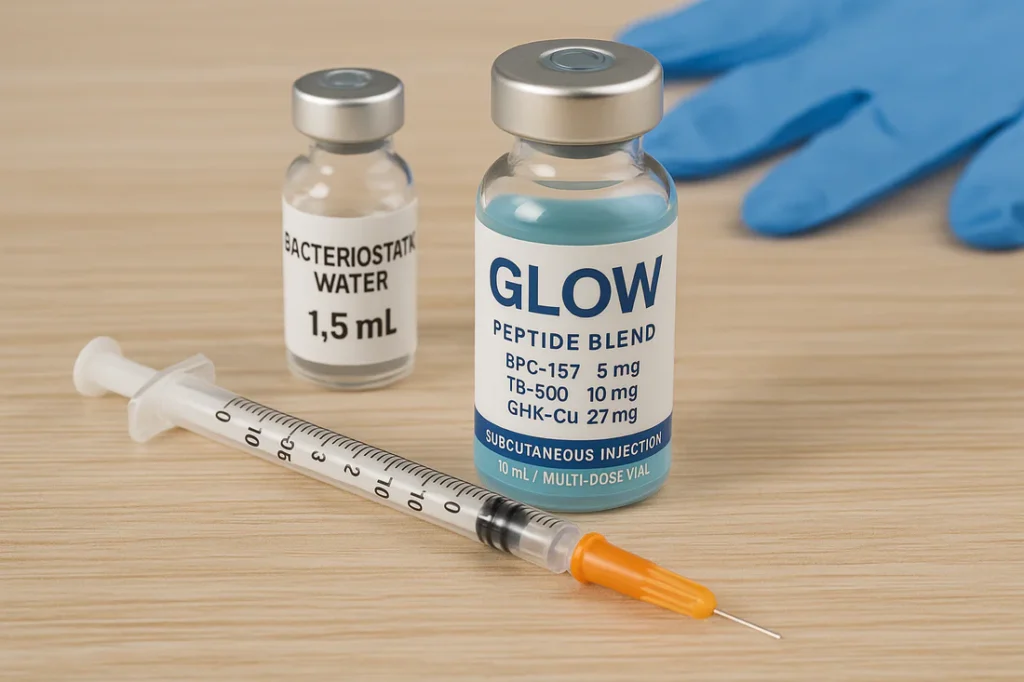
The Lavish Peptides research catalogue provides a starting point for reviewing published information about available research materials. Before considering any laboratory procedure, researchers should establish the identity of the material and consult its relevant documentation.
This peptide mixing chart for laboratory research explains compatibility concepts, solvent terminology, analytical quality, stability and responsible laboratory documentation. It does not provide preparation quantities, injection instructions, human dosing charts or universal mixing protocols.
1. What Is a Peptide Mixing Chart for Laboratory Research?
A peptide mixing chart for laboratory research is generally understood as a reference that organises information about peptide materials, their properties and relevant laboratory considerations.
Depending on its intended purpose, a chart may contain information about:
- Peptide identification.
- Molecular weight.
- Amino acid sequence.
- General solubility characteristics.
- Relevant solvent compatibility information.
- Analytical documentation.
- Storage information.
- Stability considerations.
- Laboratory safety requirements.
However, these details should not be confused with a validated preparation protocol.
A research chart can help organise scientific information, but it cannot automatically establish that a particular solvent, formulation or procedure is suitable for every peptide.
Why a universal chart can be misleading
Different peptides can behave differently even when they are supplied in similar formats.
Their chemical properties depend on factors such as amino acid composition, molecular structure, charge and hydrophobicity.
A peptide mixing chart for laboratory research should therefore be treated as an educational reference rather than a substitute for product-specific documentation.
2. Understanding Peptide Compatibility
Compatibility describes whether two or more materials can be used together without unacceptable chemical, physical or functional changes under specified conditions.
In peptide research, compatibility may involve the relationship between a peptide and its surrounding chemical environment.
Important considerations include:
- Molecular structure.
- Charge characteristics.
- Hydrophobicity.
- Chemical stability.
- Potential interactions with other substances.
- Formulation characteristics.
- Analytical evidence.
Why peptide compatibility varies
Peptides contain different combinations of amino acids. These differences can influence their behaviour in aqueous environments and other laboratory systems.
Some sequences contain more charged amino acids, while others contain a greater proportion of hydrophobic residues.
These characteristics can affect solubility and interactions with surrounding materials.
For this reason, a peptide compatibility chart should not present one general solvent recommendation as appropriate for every peptide.
Product-specific evidence
When reviewing a peptide mixing chart for laboratory research, researchers should look for evidence that relates to the exact material being evaluated.
A general compatibility statement should not be treated as a validated result unless its scientific basis and limitations are clearly established.
3. Understanding Solvent Chemistry in Peptide Research
Solvent chemistry is an important part of laboratory research because the surrounding chemical environment can influence how a substance behaves.
Different solvents have different physical and chemical characteristics.
Their suitability depends on the material, experimental objective and relevant laboratory requirements.
Aqueous environments
Water-based environments are used in many scientific applications. However, the behaviour of individual peptides in aqueous conditions can vary considerably.
Solubility should not be assumed simply because a peptide is supplied as a powder.
Organic solvents
Some research applications involve organic solvents.
Their use depends on the scientific objective, chemical compatibility and applicable laboratory safety requirements.
A solvent that is suitable for one analytical application may not be appropriate for another.
Preservatives and excipients
Some formulations contain preservatives or other excipients that influence their properties.
These substances should be considered separately from the peptide itself.
A peptide mixing chart for laboratory research should distinguish between the active peptide, formulation ingredients and the surrounding solvent system.
Why chemical compatibility matters
Incompatible conditions can contribute to precipitation, aggregation or chemical degradation.
Researchers should therefore rely on appropriate product-specific information and validated laboratory procedures rather than copying generic online mixing recommendations.
4. Understanding Lyophilised Peptides
Lyophilisation is a freeze-drying process used to remove water from suitable materials.
It is commonly used in pharmaceutical and scientific manufacturing because it can support the storage stability of certain formulations.
However, lyophilisation does not make a peptide permanently stable.
Factors affecting lyophilised materials
The characteristics of a lyophilised peptide may be influenced by:
- Amino acid sequence.
- Molecular structure.
- Formulation.
- Residual moisture.
- Packaging integrity.
- Temperature exposure.
- Light exposure.
- Storage duration.
These factors can influence the material’s stability and suitability for its intended research application.
Why appearance is not enough
The appearance of a lyophilised material cannot independently establish its identity or analytical quality.
Visual inspection may identify obvious physical changes, but it cannot replace appropriate analytical testing.
A peptide mixing chart for laboratory research should therefore encourage researchers to consult product documentation rather than relying on appearance alone.
5. Understanding Measurement Units and Laboratory Charts
Laboratory charts often contain measurement units that describe different properties.
Understanding these units is important when interpreting research documentation.
| Unit | Meaning | Measurement type |
|---|---|---|
| mg | Milligram | Mass |
| mcg | Microgram | Mass |
| mL | Millilitre | Volume |
| µL | Microlitre | Volume |
| mg/mL | Milligrams per millilitre | Concentration |
| mol/L | Moles per litre | Concentration |
Mass and volume are not interchangeable.
A mass value does not automatically establish a liquid volume. A concentration relationship requires additional information.
Why measurement clarity matters
A peptide mixing chart for laboratory research should identify the units associated with each value.
Researchers should avoid interpreting a mass measurement as a volume measurement or assuming that a syringe graduation represents a particular peptide mass.
Accurate documentation should clearly identify the material, the measurement, the units and the method used.
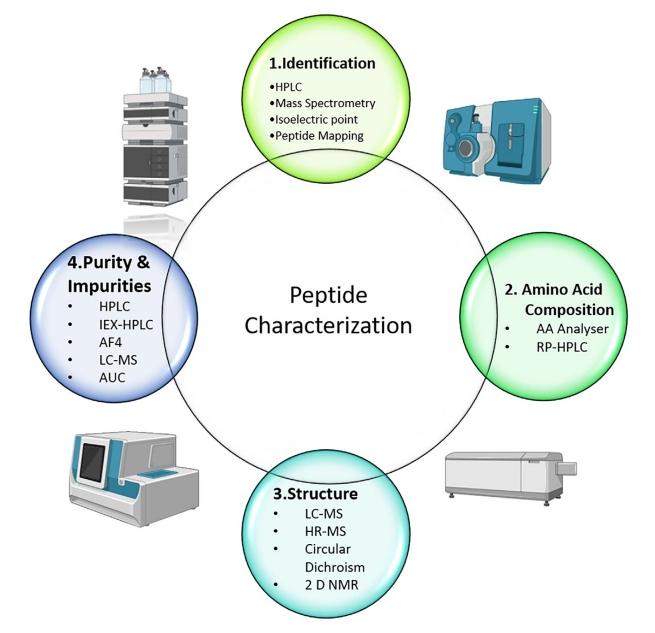
6. HPLC, LC-MS and Peptide Quality Assessment
Analytical testing can provide important information about peptide identity and composition.
Two commonly discussed techniques are high-performance liquid chromatography and liquid chromatography–mass spectrometry.
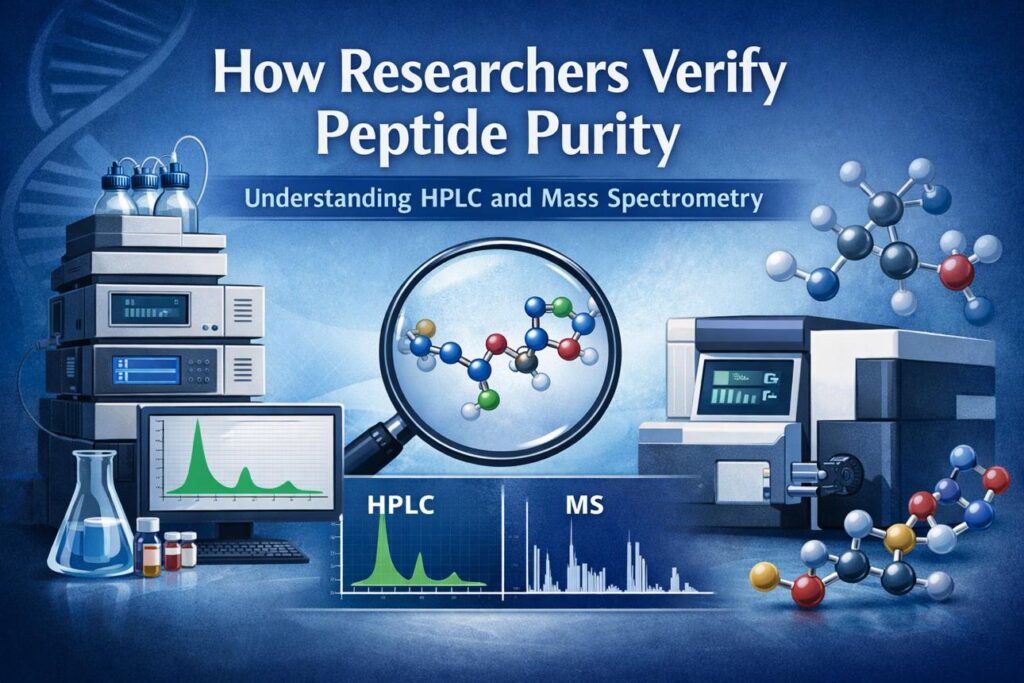
High-performance liquid chromatography
HPLC separates components within a sample.
For peptide analysis, it may provide information about the chromatographic profile and relative purity under the specified analytical conditions.
However, a reported purity percentage should not automatically be interpreted as proof of every quality characteristic.
Liquid chromatography–mass spectrometry
LC-MS combines chromatographic separation with mass spectrometry.
It can provide complementary information that supports the investigation of molecular mass and identity.
The two methods serve different analytical purposes and may be used together depending on the research requirements.
Certificates of Analysis
A Certificate of Analysis, or COA, reports specified analytical findings for a product or batch.
A useful certificate may identify:
- Product name.
- Batch or lot number.
- Test date.
- Analytical method.
- Reported results.
- Testing organisation.
- Relevant limitations.
A COA should be reviewed according to its actual contents. It does not automatically establish sterility, biological activity, compatibility or suitability for every experimental application.
For additional information about research materials and published product details, visit the Lavish Peptides blog.
7. Peptide Stability and Storage Considerations
Stability is an important consideration when reviewing a peptide mixing chart for laboratory research.
Peptides can undergo chemical or physical changes depending on their molecular characteristics and environmental conditions.
Common degradation considerations include:
- Oxidation.
- Hydrolysis.
- Deamidation.
- Aggregation.
- Moisture-related changes.
- Temperature-related degradation.
- Light-related degradation.
Temperature
Temperature can influence the rate of chemical degradation.
Laboratories should use the storage information specified for the particular material rather than assuming that all peptides have identical requirements.
Moisture
Some lyophilised materials may be sensitive to moisture exposure.
Packaging integrity and suitable environmental controls can therefore be important considerations.
Light
Certain amino acid residues may be susceptible to light-related changes.
The need for light protection should be established using relevant product information.
Stability after processing
The stability of a material can change when its physical or chemical environment changes.
Researchers should not assume that stability information for an original dry material automatically applies to a subsequently prepared formulation.
A peptide mixing chart for laboratory research should make this distinction clear.
8. Laboratory Documentation and Responsible Research
A structured laboratory documentation system can support consistency, traceability and quality control.
A peptide mixing chart for laboratory research should be used alongside appropriate records and approved laboratory procedures.
Relevant documentation may include:
- Product identification.
- Supplier information.
- Batch or lot reference.
- Available analytical reports.
- Safety information.
- Storage requirements.
- Approved procedure reference.
- Responsible personnel.
- Deviations from established procedures.
- Relevant regulatory review.
Standard Operating Procedures
A Standard Operating Procedure, or SOP, describes an approved process for a defined laboratory activity.
SOPs should be developed and reviewed by qualified personnel using appropriate product information and validated methods.
A general online peptide mixing chart for laboratory research cannot replace a product-specific SOP.
Traceability
Traceability helps laboratories connect research materials with their supporting documentation.
Batch references, inventory records and analytical reports can help organisations review material history and investigate unexpected results.
9. UK Regulatory Considerations
UK organisations should distinguish between general research materials and medicinal products.
The legal classification of a particular substance can influence how it may be supplied, imported, stored and used.
A research-use-only statement does not automatically remove applicable legal restrictions or establish authorisation for human use.
The Medicines and Healthcare products Regulatory Agency (MHRA) publishes guidance about the supply of unlicensed medicinal products and the responsibilities that may apply.
Read the official MHRA guidance on the supply of unlicensed medicinal products.
For additional scientific information, the European Medicines Agency publishes guidance covering the development and manufacture of synthetic peptides.
Read the EMA guideline on the development and manufacture of synthetic peptides.
These resources provide regulatory and scientific background. They do not constitute approval for a particular research material or preparation procedure.
Peptide Compatibility Chart: What Should a Laboratory Record?
Rather than relying on a universal mixing chart, laboratories can maintain a product-specific compatibility record.
The following table shows useful documentation categories without recommending preparation combinations or quantities.
| Documentation category | Information to record |
|---|---|
| Material identity | Product name and identifier |
| Batch information | Lot or batch reference |
| Molecular information | Available sequence and molecular weight |
| Solubility evidence | Product-specific scientific findings |
| Compatibility | Documented compatibility information |
| Analytical testing | Available HPLC or LC-MS records |
| Stability | Supported stability information |
| Storage | Manufacturer or validated storage requirements |
| Safety | Relevant safety documentation |
| Procedure | Reference to an approved laboratory SOP |
This format can help researchers organise information while avoiding unsupported assumptions about universal peptide compatibility.
Common Mistakes When Using Peptide Mixing Charts
Assuming every peptide has identical properties
Different amino acid sequences can produce different chemical and physical characteristics.
Treating a general chart as a validated protocol
An educational reference cannot replace product-specific laboratory procedures.
Confusing mass and volume
Milligrams and micrograms measure mass, while millilitres and microlitres measure volume.
Treating purity as proof of compatibility
A purity result does not establish that a peptide is compatible with every solvent or formulation.
Ignoring stability information
Storage and stability requirements should be based on the specific material and relevant evidence.
Confusing research materials with medicines
Research-use labelling does not establish authorisation for medicinal use.
Peptide Mixing Chart for Laboratory Research: Extended Quality and Documentation Guide
1. Understanding the Purpose of a Research Chart
A peptide mixing chart for laboratory research helps organise scientific information about peptide materials and their documented characteristics. A peptide mixing chart for laboratory research should distinguish between general educational information and validated laboratory procedures.
When reviewing a peptide mixing chart for laboratory research, researchers should consider product identification, analytical documentation and compatibility information. A peptide mixing chart for laboratory research should never be treated as a universal preparation formula.
2. Peptide Identification and Classification
A peptide mixing chart for laboratory research should begin with accurate material identification. Each peptide has characteristics that may influence its laboratory behaviour.
A peptide mixing chart for laboratory research should identify the specific compound being discussed. Researchers using a peptide mixing chart for laboratory research should avoid transferring assumptions from one peptide to another.
A reliable peptide mixing chart for laboratory research should also distinguish between research materials and medicinal products.
3. Understanding Chemical Compatibility
A peptide mixing chart for laboratory research should explain that chemical compatibility depends on the material and its surrounding environment.
Researchers consulting a peptide mixing chart for laboratory research should consider molecular structure, amino acid composition and formulation characteristics.
A peptide mixing chart for laboratory research should not suggest that every peptide has identical compatibility requirements. Product-specific evidence remains important when interpreting a peptide mixing chart for laboratory research.
4. Solvent Chemistry and Research Materials
A peptide mixing chart for laboratory research can provide an educational introduction to solvent chemistry. Different solvents have different physical and chemical characteristics.
A peptide mixing chart for laboratory research should distinguish aqueous environments from organic solvent systems. Researchers using a peptide mixing chart for laboratory research should consult appropriate scientific documentation.
The information in a peptide mixing chart for laboratory research should not be interpreted as approval for a particular preparation procedure.
5. Lyophilised Peptide Documentation
A peptide mixing chart for laboratory research should recognise that lyophilised materials have individual stability characteristics.
When reviewing a peptide mixing chart for laboratory research, researchers should consider packaging, moisture exposure and available stability information.
A peptide mixing chart for laboratory research should also distinguish between the original dry material and any subsequently processed formulation.
6. HPLC and Analytical Quality
A peptide mixing chart for laboratory research should include analytical documentation as an important quality consideration.
HPLC can provide information about a sample’s chromatographic profile. A peptide mixing chart for laboratory research should explain that chromatographic purity does not establish every quality characteristic.
Researchers evaluating a peptide mixing chart for laboratory research should also understand the role of LC-MS analysis.
A peptide mixing chart for laboratory research should encourage careful interpretation of analytical reports and their limitations.
7. Certificates of Analysis and Batch Records
A peptide mixing chart for laboratory research should encourage the review of available Certificates of Analysis.
A peptide mixing chart for laboratory research can help researchers organise batch identification, test dates and reported analytical findings.
When using a peptide mixing chart for laboratory research, organisations should check that supporting documentation relates to the material being evaluated.
A peptide mixing chart for laboratory research should not present a generic certificate as proof of every product characteristic.
8. Peptide Stability and Storage Information
A peptide mixing chart for laboratory research should recognise that stability varies between materials.
Researchers consulting a peptide mixing chart for laboratory research should review the product-specific storage information.
A peptide mixing chart for laboratory research should consider temperature, moisture, light exposure and packaging integrity as relevant documentation categories.
The stability information included in a peptide mixing chart for laboratory research should be supported by appropriate product-specific evidence.
9. Laboratory Measurement Terminology
A peptide mixing chart for laboratory research should use clear measurement terminology.
Researchers using a peptide mixing chart for laboratory research should distinguish between mass, volume and concentration.
A peptide mixing chart for laboratory research should identify the units associated with each reported measurement.
Clear measurement information makes a peptide mixing chart for laboratory research more useful for scientific recordkeeping.
10. Responsible Laboratory Procedures
A peptide mixing chart for laboratory research should be used alongside appropriate laboratory procedures.
Researchers reviewing a peptide mixing chart for laboratory research should consult validated, product-specific SOPs.
A peptide mixing chart for laboratory research cannot replace qualified oversight or approved procedures.
Responsible use of a peptide mixing chart for laboratory research requires attention to documentation, safety and applicable requirements.
11. UK Research and Regulatory Considerations
A peptide mixing chart for laboratory research should distinguish general laboratory information from medicinal-product instructions.
UK organisations using a peptide mixing chart for laboratory research should establish the legal classification of the material.
A peptide mixing chart for laboratory research should not imply that research-use labelling removes applicable legal restrictions.
Regulatory information should form part of a peptide mixing chart for laboratory research where the material or intended activity may be subject to medicines legislation.
12. Building a Useful Research Reference
A peptide mixing chart for laboratory research is most useful when its information is clearly organised and supported by reliable documentation.
Researchers developing a peptide mixing chart for laboratory research should consider material identity, batch records, analytical findings and stability information.
A peptide mixing chart for laboratory research should clearly identify any missing information rather than making unsupported assumptions.
The purpose of a peptide mixing chart for laboratory research is to support scientific understanding and documentation, not to replace validated procedures.
Final Considerations for Researchers
A peptide mixing chart for laboratory research should always be interpreted in the context of the specific material and research application.
A peptide mixing chart for laboratory research can help organise compatibility information, but it cannot independently establish that a particular combination is suitable.
Ultimately, a peptide mixing chart for laboratory research should prioritise scientific accuracy, product-specific evidence, laboratory safety and regulatory awareness.
Frequently Asked Questions
1. What is a peptide mixing chart for laboratory research?
It is a general reference used to organise information about peptide materials, compatibility considerations, measurement terminology and laboratory documentation. It should not be treated as a universal preparation protocol.
2. Do all peptides have the same compatibility requirements?
No. Peptide compatibility depends on molecular structure, amino acid sequence, formulation and the surrounding chemical environment.
3. What is the difference between a peptide compatibility chart and a mixing chart?
A compatibility chart focuses on documented relationships between materials and their chemical environments. A mixing chart may refer to preparation information. Neither should replace a validated product-specific procedure.
4. What is lyophilisation?
Lyophilisation is a freeze-drying process used to remove water from suitable materials. It can support storage stability, although the stability of each peptide depends on its characteristics and formulation.
5. Why is HPLC used in peptide research?
HPLC separates components within a sample and can provide information about its chromatographic profile and relative purity under specified analytical conditions.
6. What is LC-MS testing?
LC-MS combines liquid chromatography with mass spectrometry. It can provide complementary information about molecular mass and support the investigation of compound identity.
7. Can a COA confirm that a peptide is compatible with every solvent?
No. A Certificate of Analysis reports specified analytical findings. It does not automatically establish compatibility with every solvent or formulation.
8. Can an online peptide mixing chart replace laboratory SOPs?
No. Laboratory SOPs should be specific to the material, intended activity and validated method. A general online chart is educational information only.
9. Are research peptides automatically authorised for human use in the UK?
No. Research-use labelling does not automatically establish medicinal authorisation or remove applicable regulatory requirements.
10. Where can UK laboratories find scientific guidance on synthetic peptides?
The European Medicines Agency publishes scientific guidance on synthetic peptide development and manufacture. The MHRA also publishes relevant UK medicines-regulation information.
Conclusion: Use Product-Specific Evidence Rather Than Universal Mixing Charts
A peptide mixing chart for laboratory research can help organise scientific information, but it should not be treated as a universal preparation formula.
Peptides have different chemical properties, compatibility characteristics and stability profiles. Their analytical documentation and storage requirements should therefore be assessed individually.
HPLC, LC-MS and Certificates of Analysis can contribute useful information, but their findings must be interpreted according to the scope of each test.
For laboratories and research organisations, the responsible approach is to maintain accurate records, consult product-specific documentation, follow approved procedures and confirm applicable regulatory requirements.
For additional company and catalogue information, visit Lavish Peptides or review the Lavish Peptides research catalogue.
