
Peptide Storage UK practices are an important part of maintaining peptide stability, consistency, and quality throughout laboratory research environments.
Table of Contents
- Introduction
- Why Proper Peptide Storage Matters
- Refrigerated vs Frozen Storage
- Protect Peptides from Light Exposure
- Avoid Moisture Contamination
- Reduce Freeze-Thaw Cycles
- Store Reconstituted Peptides Correctly
- Use Proper Storage Containers
- Monitor Storage Temperatures
- Keep Accurate Laboratory Records
- Common Peptide Storage Mistakes
- Frequently Asked Questions
- Conclusion
Introduction
A reliable Peptide Storage Guide is an essential resource for researchers working with peptide compounds in laboratory environments. Proper storage practices help preserve peptide stability, maintain consistency, and support accurate scientific investigations.
As peptide research continues growing throughout the United Kingdom and Europe, researchers are increasingly working with compounds such as Tesamorelin UK, CJC-1295 No DAC & Ipamorelin UK, BPC-157, TB-500, Retatrutide, and Tirzepatide. Understanding how to store these compounds correctly is an important part of responsible laboratory handling.
Improper storage conditions may increase the risk of degradation, contamination, and reduced peptide stability. Following a structured Peptide Storage Guide can help researchers maintain better laboratory standards and support more reliable research outcomes.
Why Researchers Search for Peptide Storage UK Information
Interest in Peptide Storage UK practices continues growing as more researchers seek reliable information about storing research peptides correctly. Understanding Peptide Storage UK recommendations can help researchers maintain consistency, reduce handling errors, and support better laboratory procedures throughout long-term investigations.
Why Peptide Storage UK Practices Matter
Peptides are sensitive research compounds that can be affected by environmental conditions.
Factors that may influence peptide stability include:
- Temperature fluctuations
- Direct sunlight
- Moisture exposure
- Oxygen exposure
- Repeated freeze-thaw cycles
Proper storage practices help minimise these risks while supporting long-term peptide integrity.
Researchers often combine storage protocols with resources such as a Peptide Calculator UK to improve overall preparation and handling procedures.
Benefits of Following Peptide Storage UK Guidelines
Following established Peptide Storage UK guidelines can help researchers maintain more consistent laboratory conditions and improve peptide handling procedures. As interest in research peptides continues growing, Peptide Storage UK education has become increasingly important for laboratories seeking reliable storage practices.
Benefits of Following Peptide Storage UK Guidelines
Following established Peptide Storage UK guidelines can help researchers maintain more consistent laboratory conditions and improve peptide handling procedures. As interest in research peptides continues growing, Peptide Storage UK education has become increasingly important for laboratories seeking reliable storage practices.
Benefits of Following Peptide Storage UK Guidelines
Many researchers use Peptide Storage UK resources to better understand refrigeration requirements, storage temperatures, reconstitution handling, and long-term peptide preservation strategies. By implementing recognised Peptide Storage UK recommendations, laboratories can reduce avoidable storage mistakes and improve overall research consistency.
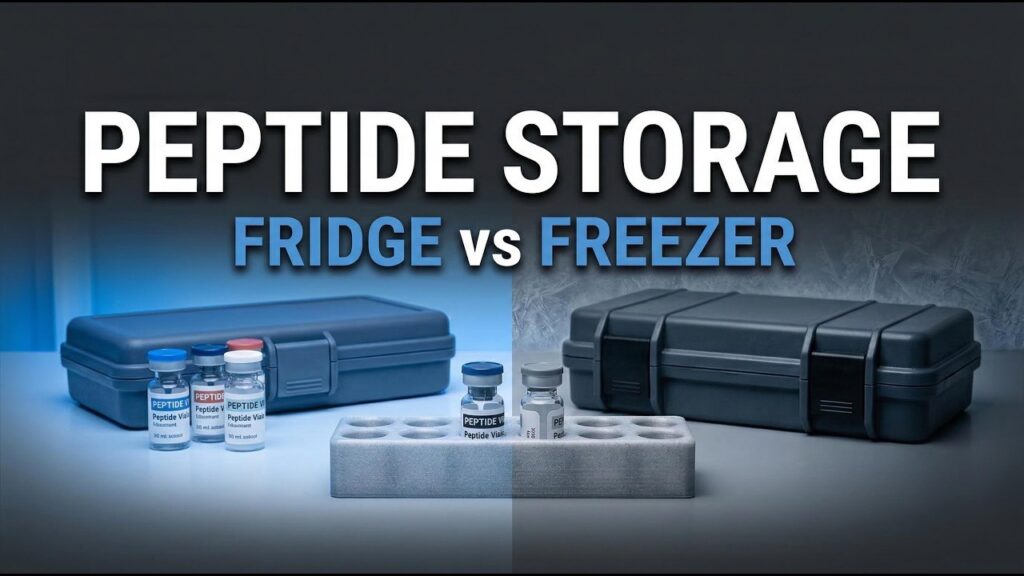
1. Refrigerated vs Frozen Storage
One of the most common topics within any Peptide Storage Guide involves temperature control.
Storage recommendations often vary depending on:
- Peptide structure
- Research duration
- Reconstitution status
- Laboratory protocols
Many laboratories commonly use:
Refrigeration
Typically used for short-term storage of reconstituted compounds.
Freezing
Often used for longer-term storage of lyophilised or prepared peptide materials.
Maintaining stable temperatures helps reduce unnecessary environmental stress on peptide compounds.
2. Protect Peptides from Light Exposure
Light exposure can contribute to peptide degradation over time.
Researchers commonly store peptides:
- Away from direct sunlight
- Inside laboratory storage units
- Within sealed containers
- In controlled storage environments
Protecting compounds from unnecessary light exposure is a simple but effective storage practice.
3. Avoid Moisture Contamination
Moisture is another important consideration covered by every Peptide Storage Guide.
Excess moisture may affect peptide stability and introduce contamination risks.
Researchers typically reduce moisture exposure by:
- Keeping containers sealed
- Using dry storage conditions
- Limiting unnecessary handling
- Following laboratory preparation procedures
Maintaining a controlled environment helps preserve compound quality.
4. Reduce Freeze-Thaw Cycles
Repeated freezing and thawing may negatively impact peptide stability.
Researchers often attempt to minimise unnecessary freeze-thaw cycles by:
- Preparing aliquots
- Using smaller storage volumes
- Planning laboratory workflows in advance
This approach may help maintain more consistent storage conditions over time.
5. Store Reconstituted Peptides Correctly
Reconstituted peptides generally require additional storage considerations.
Once a peptide has been mixed with a suitable solvent, researchers often prioritise:
- Controlled refrigeration
- Reduced handling
- Limited temperature fluctuations
- Appropriate laboratory storage protocols
Accurate preparation procedures should also be supported through educational resources such as a Peptide Calculator UK when calculating concentrations and reconstitution ratios.
6. Use Proper Storage Containers
Storage containers play an important role in peptide preservation.
Researchers commonly select containers designed to:
- Minimise environmental exposure
- Reduce contamination risks
- Support long-term storage requirements
Using appropriate laboratory-grade storage materials helps maintain consistency throughout research projects.
7. Monitor Storage Temperatures
A key recommendation within any Peptide Storage Guide is temperature monitoring.
Maintaining stable storage conditions helps researchers identify potential problems before they affect stored compounds.
Laboratories often use:
- Refrigeration systems
- Freezers
- Temperature logs
- Monitoring equipment
Regular monitoring helps support quality-control procedures.
8. Keep Accurate Laboratory Records
Documentation remains an important part of peptide handling.
Researchers commonly record:
- Storage dates
- Preparation dates
- Reconstitution details
- Temperature records
- Batch information
Accurate records improve consistency and support repeatability across laboratory investigations.
9. Follow Established Laboratory Procedures
Every research environment should establish clear peptide handling procedures.
A structured Peptide Storage Guide helps laboratories create standardised practices for:
- Storage
- Handling
- Preparation
- Documentation
- Quality control
Consistency remains one of the most important factors in successful peptide research.
Common Peptide Storage UK Mistakes
Researchers frequently encounter avoidable storage errors.
Leaving Peptides at Room Temperature Too Long
Extended exposure may affect stability depending on the compound being researched.
Improper Reconstitution Handling
Incorrect preparation procedures may increase contamination risks.
Repeated Freeze-Thaw Cycles
Frequent temperature changes may affect compound consistency.
Poor Documentation
Failure to record storage conditions can create inconsistencies during long-term investigations.
Avoiding these common mistakes can help improve overall laboratory handling standards.
Researchers following established Peptide Storage UK guidelines often prioritise temperature control, moisture protection, and proper documentation. By applying recognised Peptide Storage UK practices, laboratories can create more consistent storage conditions for research compounds.
Scientific Research and Storage Standards
Researchers seeking additional scientific information regarding peptide stability, storage conditions, and laboratory handling standards may review published literature through the National Library of Medicine:
https://pubmed.ncbi.nlm.nih.gov
Scientific literature continues providing valuable insights into peptide stability, storage practices, and laboratory methodology.
Frequently Asked Questions
Why is peptide storage important?
Proper storage helps maintain peptide stability, consistency, and quality throughout laboratory investigations.
Should peptides always be refrigerated?
Storage requirements may vary depending on the peptide compound and laboratory protocols being followed.
Can peptides degrade over time?
Improper handling, moisture exposure, excessive heat, and repeated freeze-thaw cycles may increase degradation risks.
Why should researchers avoid repeated freeze-thaw cycles?
Repeated temperature fluctuations may affect peptide stability and consistency.
What is the purpose of a Peptide Storage Guide?
A Peptide Storage Guide helps researchers understand best practices for storing, handling, and preserving peptide compounds during scientific investigations.
What are the most important Peptide Storage UK recommendations?
The most important Peptide Storage UK recommendations include maintaining stable temperatures, protecting peptides from moisture and light exposure, reducing freeze-thaw cycles, and following documented laboratory handling procedures.
Why is Peptide Storage UK information important?
Peptide Storage UK information helps researchers understand how to store research peptides correctly, reduce degradation risks, and maintain better laboratory consistency. Following recognised Peptide Storage UK recommendations can support more reliable handling and storage procedures.
The importance of Peptide Storage UK practices should not be underestimated. Proper Peptide Storage UK procedures support peptide stability, improve laboratory organisation, and help researchers maintain consistent handling standards throughout scientific investigations. As research continues advancing, Peptide Storage UK education will remain an important part of responsible peptide handling.
Conclusion
Following a structured Peptide Storage Guide can help researchers improve peptide handling procedures, maintain consistent storage conditions, and support long-term compound stability. While storage requirements may vary depending on the specific peptide being investigated, maintaining controlled temperatures, reducing moisture exposure, and minimising unnecessary freeze-thaw cycles remain common best practices throughout laboratory environments.
Following proper Peptide Storage UK procedures can help researchers maintain peptide stability, improve consistency, and support reliable laboratory investigations.
As peptide research continues expanding throughout the UK and Europe, educational resources focused on storage, preparation, and handling become increasingly valuable. Researchers working with compounds such as Tesamorelin UK and https://lavishpeptides.com/product/cjc-1295-no-dac-ipamorelin-uk/
benefit from understanding proper storage principles as part of broader laboratory quality-control procedures.
By combining accurate preparation methods, proper documentation, and responsible storage practices, researchers can create more consistent environments for scientific investigation while supporting the long-term integrity of peptide compounds.
